
The Real Reasons Homes Don’t Sell


When a house isn’t selling, it often becomes a significant issue in divorce cases. A property that sits on the market can create tension between clients, frustrate attorneys, restrict cash flow, and ultimately delay resolution.
When a home isn’t moving, there are typically three reasons — and in almost every case, it comes down to one (or more) of the following:
1) Price
If the pricing strategy misses the mark, the property will likely struggle to gain Traction.
Buyers make decisions based on perceived value, and they compare properties quickly. A home may have
excellent features, upgrades, or emotional significance to the sellers, but buyers ultimately determine value
through what they are willing to pay in the current market.
Pricing should be thoughtful and adaptable. Conditions can shift, new comparable sales can emerge, and buyer
behavior can change. What felt like the right number at the start of the listing period may require reassessment
as the process unfolds.
Who’s responsible:
Pricing is a shared responsibility between the CDRE® and the clients. The CDRE should be a market expert with
a strong understanding of value, positioning, and strategy. At the same time, clients need to remain realistic in
their expectations. The goal is not to price according to what someone hopes or needs to receive; the goal is to
align with market realities and position the property for success.
2) Exposure
Exposure comes down to how many qualified buyers are actually seeing the property.
Today, that process happens largely online. A listing should be positioned and promoted across multiple
channels, including major real estate platforms, search visibility, social media, email campaigns, and agent
networks. Traditional marketing still has value, but broad and targeted digital exposure has become essential.
Who’s responsible:
This responsibility falls primarily on the CDRE. Marketing a home effectively requires both creativity and strategy
—the art of presenting the property and the science of putting it in front of the right audience.
Exposure also includes responsiveness. Buyer inquiries, showing requests, and agent communication require
prompt attention. Delays or missed opportunities can cost momentum and, in some cases, cost a sale.
3) Experience
Once a buyer arrives at the property, the experience begins immediately.
How does the home present from the curb?
How does it feel when they walk through the front door?
Is the space clean, welcoming, and easy to envision living in?
Does the home feel comfortable and well maintained?
Even small details can influence a buyer’s perception. Real estate decisions are often emotional, and seemingly
minor distractions can leave a lasting Impression.
Who’s responsible:
The seller plays an important role in the experience. Presentation, accessibility, and overall readiness matter.
Buyers should feel comfortable and focused on the home itself rather than distracted by avoidable issues.
The Divorce Factor
In divorce matters, these issues can become amplified. One party may resist showings, communication can break down, pricing disagreements can emerge, or reasonable offers may be viewed through an emotional lens.
When those challenges arise, even a well-priced and properly marketed property can sit longer than necessary—adding stress, reducing flexibility, and creating additional complications for everyone involved.
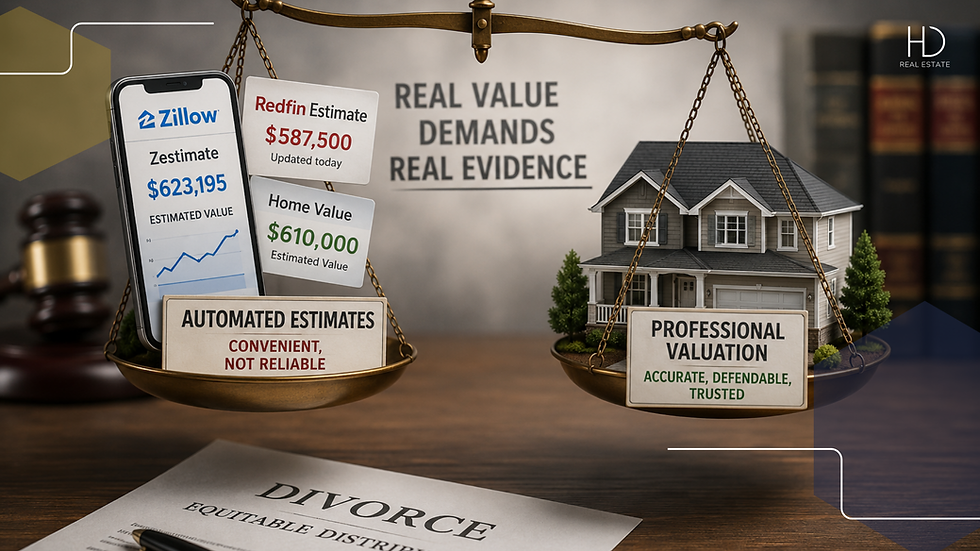
There is often a balancing scale at work. If the buyer experience suffers because of condition, accessibility, or other challenges, the pricing strategy may need to compensate. A premium price paired with a compromised experience can be a difficult combination to overcome.
If you ever want a second opinion or a quick analysis on a property that is not gaining traction, I’m just a call away.


Comments